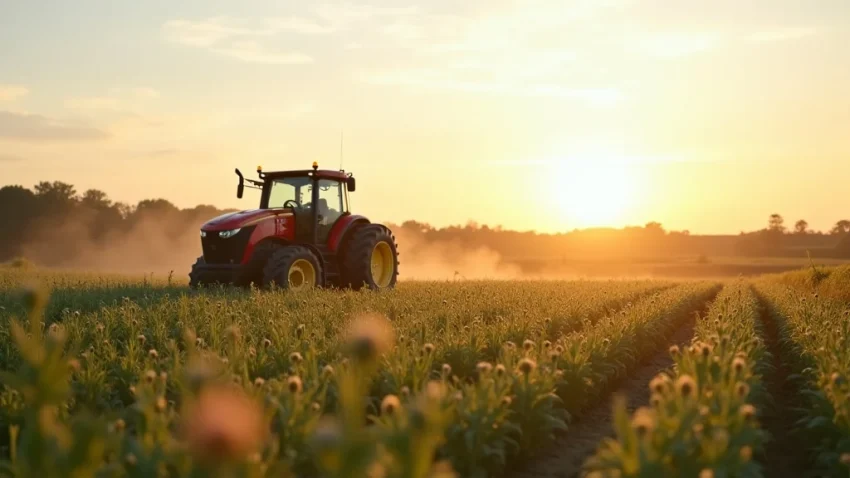
Buying land for farming can seem tricky at first. You might wonder where to start or what to look for. Many new farmers find it a big step.
But it doesn’t have to be hard. This guide makes finding agriculture land for sale simple. We’ll walk through it step by step.
Let’s look at what makes a good choice and how to get there.
Key Takeaways
- You will learn where to find listings for agriculture land.
- Discover important factors to check before buying land.
- Understand common legal steps in buying farmland.
- Learn about financing options for agriculture land purchases.
- Get tips for negotiating the best deal on farmland.
Locating Agriculture Land For Sale
Finding the right piece of land is the first big step for anyone wanting to farm. It’s like finding a perfect spot for a new home, but for your crops or livestock. There are many places to look, and some are better than others depending on what you need.
Think about what kind of farming you want to do. Do you want to grow vegetables, raise animals, or perhaps have an orchard? This will help you decide what kind of land is best.
Online Listing Platforms
The internet has made finding agriculture land for sale much easier than it used to be. Websites dedicated to real estate often have filters for agricultural properties. You can search by location, size, and price.
Some sites specialize in rural land or farms. These platforms are great because they gather many listings in one place.
- Farm & Ranch Websites
Many websites focus solely on farm and ranch properties. They often have detailed information about soil types, water rights, and previous use of the land. These details are very important for farmers.
You can often find photos and sometimes even drone videos of the property. This helps you get a good feel for the land before visiting it.
- General Real Estate Portals
Larger real estate websites also list farms. You might need to use specific keywords like ‘farmland,’ ‘acreage,’ or ‘ranch’ to find them. These sites are good for a broad search.
They can show you what’s available in different areas. Be sure to look at the details provided. Sometimes, these listings are managed by agents who know a lot about rural properties.
- Local Classifieds and Newspapers
Don’t forget about local resources. Sometimes, land is listed in local newspapers or online classifieds for a specific town or county. These listings might come directly from landowners.
This can sometimes mean less competition or a chance to negotiate directly. It’s a good idea to check these out, especially if you have a particular area in mind.
Working with Real Estate Agents
A real estate agent who specializes in farmland can be a great help. They know the local market and have access to listings that might not be public yet. An experienced agent can guide you through the process.
They can help you understand the value of land and what to look for. They also handle a lot of the paperwork, which is a big help when you’re new to this.
- Specialized Agents
Agents who focus on agricultural properties are a valuable resource. They understand the unique aspects of farmland, such as soil quality, water access, and zoning laws for farming. They can point you towards land suitable for your specific farming needs.
They also often have connections with other farmers or landowners who might be selling.
- Market Knowledge
These agents have a deep understanding of local land values. They can tell you if a price is fair or if it’s too high. They know about recent sales in the area.
This knowledge is essential for making a smart purchase. They can also advise you on potential issues with a property that you might not notice yourself.
Direct from Owners
Sometimes, farmers sell their land directly. This can happen through word-of-mouth or by putting up ‘for sale’ signs on the property. This method can sometimes lead to a lower price because there are no agent commissions.
It also allows for more direct communication. You can talk to the current owner about the land’s history and its best uses.
One example of finding land directly is through local farming communities. Attend agricultural events, join farming groups on social media, or simply talk to other farmers in the area you’re interested in. Many times, farmers know when someone is thinking of selling their land before it’s officially listed.
This can give you an early advantage.
Assessing Potential Farmland
Once you find some promising agriculture land for sale, you need to look at it closely. It’s not just about the size or the price. You need to make sure the land is actually good for farming and meets your needs.
This involves looking at several key features. These features will determine how well your farm will do and how much work it will be to get it running.
Soil Quality and Type
The soil is the foundation of any farm. Different crops need different kinds of soil. Loam soil, which is a mix of sand, silt, and clay, is often considered ideal for many types of agriculture.
It holds water well but also drains properly. Sandy soils drain too quickly and don’t hold nutrients well. Clay soils can be too dense and have drainage issues.
When looking at farmland, you should try to find out about the soil composition. Local agricultural extension offices can often provide soil maps or reports for different areas. These maps show the different soil types present.
They also provide information about their suitability for various crops. A soil test is also a good idea. This test will tell you about the nutrient levels and pH of the soil.
For example, a farmer looking to grow corn might need deep, well-drained soil with plenty of organic matter. This type of soil can support the large plants and provide the nutrients they need. On the other hand, a vineyard might prefer a soil that drains very well, even if it’s less rich, as too much water can harm grapevines.
Knowing your crop needs and matching them to the soil type is vital.
- Soil Tests
Performing a soil test is one of the most critical steps. You can take samples from different parts of the land and send them to a lab. The results will show you the nutrient levels, pH, and organic matter content.
This information helps you decide if the soil is suitable for your intended crops. It also tells you what amendments, like lime or fertilizer, you might need.
- Soil Maps and Reports
Government agencies, like the USDA’s Natural Resources Conservation Service (NRCS) in the US, provide detailed soil maps. These maps show the different soil types across the country. They give you a general idea of what to expect in a region.
They also describe the properties of each soil type, such as drainage, texture, and suitability for farming.
- Impact on Crop Yields
The quality of your soil directly impacts how much you can grow. Poor soil will lead to lower crop yields, meaning less product and less income. Improving poor soil can be expensive and time-consuming.
It’s often more cost-effective to find land with good soil from the start. This is especially true for beginners who are still learning the ropes of farming.
Water Access and Rights
Water is essential for farming. You need to know how much water is available and if you have the legal right to use it. This is especially important in dry areas.
Look for land that is near a reliable water source, such as a river, lake, or well. Also, check if there are existing water rights associated with the property. Water rights can be complex legal matters.
In some regions, water is a scarce resource. The laws governing who can use water and how much can vary significantly. You need to understand these laws.
Buying land with established water rights can save you a lot of trouble and expense later on. If the land relies on rainfall, you need to consider the typical weather patterns for the area. Is there enough rain for your crops during the growing season?
Consider a scenario where you are buying land in a desert region. You might find beautiful, inexpensive land. However, if there are no wells or water pipelines nearby, and no water rights, it might be impossible to farm there.
You’d be limited to very drought-tolerant crops or livestock that don’t need much water. This dramatically limits your farming options and profitability.
- Sources of Water
Identify all potential sources of water for the property. This includes natural sources like rivers, streams, and lakes. Also, consider man-made sources like wells, irrigation canals, and municipal water supplies.
Proximity to these sources is important for cost and ease of access. If a well is present, find out its depth and the typical water table level.
- Water Rights and Regulations
Water rights are legal claims to use water. These vary by state and country. Some systems are ‘first in time, first in right,’ meaning whoever used the water first has priority.
Others are based on riparian rights, meaning you only have rights if your land borders a water source. It’s vital to investigate these rights thoroughly to ensure you can legally use the water you need for your farming operations.
- Irrigation Systems
If irrigation is necessary, check if any existing irrigation systems are in place. These could include sprinklers, drip systems, or flood irrigation. The condition and efficiency of these systems matter.
You’ll also need to consider the cost of maintaining or upgrading them. Water conservation is also becoming increasingly important, so efficient systems are a plus.
Topography and Drainage
The shape of the land, or its topography, affects how water flows. Flat land is generally easier to work with for planting and harvesting. Sloping land can be good for drainage, but it can also lead to soil erosion if not managed properly.
Steep slopes may not be suitable for many types of machinery.
Good drainage is crucial. You don’t want water to sit on the fields for too long, as this can harm plant roots and promote diseases. Look for areas that drain naturally.
If the land has drainage issues, you might need to consider installing drainage tiles or ditches. This adds to the cost and effort of preparing the land for farming.
Imagine buying a piece of land that looks great from a distance. But when you visit, you see that one side of the property is a low-lying area that collects water after a rain. This area might be unusable for most of the year.
You need to check for these natural drainage patterns. Observing the land after a rainfall can reveal potential problems. Look for areas where water pools or runs off quickly.
- Slope Considerations
The steepness of the slope impacts how you can use the land. Gentle slopes are generally manageable for most farming activities. Very steep slopes might only be suitable for grazing livestock or planting trees.
They can also increase the risk of erosion, especially on tilled fields. Proper land management techniques are needed for sloped terrain.
- Drainage Patterns
Understanding how water moves across the land is key. Natural drainage can be helped or hindered by the land’s shape and the presence of vegetation. Look for signs of waterlogging, such as mossy areas or water-loving plants.
Conversely, areas that dry out too quickly might have poor water retention, affecting crop growth.
- Erosion Control
Erosion can carry away fertile topsoil, reducing the land’s productivity over time. Steep slopes and certain farming practices can increase erosion. If erosion is a concern, consider the existing vegetation cover.
Contour plowing and cover crops are methods used to prevent erosion on sloped land. The cost and feasibility of these methods should be factored in.
Infrastructure and Utilities
Having access to essential utilities can make a big difference. Consider whether the land has access to electricity, natural gas, and internet. Proximity to roads is also important for getting equipment in and out, and for transporting your produce.
Check the condition of any existing buildings, fences, or wells.
If you plan to build new structures, like barns or sheds, you’ll need to know about zoning regulations. Zoning laws dictate what you can build and where. Also, consider the cost of connecting utilities if they are not already present.
Sometimes, extending power lines or installing a septic system can be very expensive. For a new farm, having good roads and basic utilities already in place saves a lot of headaches.
Picture this: you buy a remote piece of land that’s perfect for organic farming. However, there’s no electricity. You’ll need to power your equipment, cool your produce, and perhaps even run a farm office.
Relying solely on generators can be costly and noisy. Exploring the options for connecting to the grid, or considering solar power, is important. Researching the cost and feasibility of these solutions early on is wise.
- Electricity and Power
Access to electricity is vital for most modern farming operations. It powers machinery, lighting, refrigeration, and irrigation pumps. Find out if the property is already connected to the grid.
If not, investigate the cost and timeline for extending power lines. Consider renewable energy options like solar or wind power as well.
- Water and Sewer
While we discussed water access for irrigation, potable water is also necessary for any farm buildings and for any potential farm stand or residence. If there are no municipal services, a well and septic system will be needed. Ensure the land is suitable for a septic system and that a reliable water source for drinking is available.
- Road Access and Transportation
Good road access is crucial for moving equipment, supplies, and harvested crops. Check the condition of the roads leading to and on the property. Are they paved or gravel?
Are they maintained year-round? Consider the distance to major transportation routes. This affects the cost and efficiency of getting your products to market.
- Telecommunications
In today’s world, reliable internet and phone service are almost essential for running a farm. This is needed for communication, ordering supplies, marketing your products, and accessing information. Check the availability and quality of broadband internet and cell service in the area.
Poor connectivity can be a significant disadvantage.
Navigating the Purchase Process
Buying agriculture land for sale involves several steps, from making an offer to closing the deal. It’s important to understand these steps. This helps ensure a smooth transaction and avoids unexpected problems.
Each step has its own requirements and considerations.
Making an Offer
Once you find land you like, you’ll need to make an offer. This is a formal proposal to buy the property at a certain price. Your offer will usually include the price you’re willing to pay, the terms of the sale, and a closing date.
It’s often made through a real estate agent. The seller can accept your offer, reject it, or make a counteroffer.
Your offer might also include contingencies. These are conditions that must be met for the sale to go through. Common contingencies for farmland include a satisfactory land survey, a professional inspection, and securing financing.
Having these contingencies protects you. If any of them are not met, you can withdraw from the deal without losing your deposit.
For instance, if you offer to buy a farm, but your financing contingency states you need to get a mortgage for 80% of the purchase price within 30 days. If, after trying your best, the bank won’t lend you that amount, you can cancel the offer. You would then get your earnest money deposit back.
This is a key protection for buyers.
- Offer Price and Terms
The offer price is what you propose to pay. The terms include details like the closing date, what is included in the sale (e.g., equipment, crops), and any special conditions. Be prepared to negotiate.
The seller might accept your offer as is, reject it, or propose changes through a counteroffer. Understanding the local market value helps you make a competitive offer.
- Contingencies for Protection
Contingencies are clauses in the offer that make the sale conditional on certain events. Common ones include financing, inspection, and survey contingencies. A financing contingency ensures you can get a loan.
An inspection contingency allows you to back out if a professional finds major issues with the land or structures. A survey contingency confirms property boundaries.
- Earnest Money Deposit
When you make an offer, you typically provide an earnest money deposit. This is a good faith deposit that shows you are serious about buying. It’s usually held by a neutral third party, like an escrow company.
If the sale goes through, the deposit is usually applied to the purchase price. If you back out for a reason not covered by a contingency, you might forfeit this deposit.
Securing Financing
Most people need a loan to buy farmland. There are different types of loans available for agricultural properties. These can include traditional mortgages, loans from government-backed programs, or loans from agricultural credit banks.
Your lender will want to see a solid business plan and a good credit history.
Lenders will evaluate the property’s value and its potential for income. They might require a professional appraisal of the land. Interest rates and loan terms can vary greatly.
It’s important to shop around and compare offers from different lenders. This can save you a lot of money over the life of the loan. Some lenders specialize in farm loans, so they understand the unique needs of farmers.
Consider a new farmer who wants to buy 100 acres of land. The land costs $500,000. They have $100,000 saved for a down payment.
They need to secure a loan for $400,000. They apply to a few banks. One bank offers a 5% interest rate for 20 years.
Another offers 4.5% for 25 years. The farmer compares the monthly payments and total interest paid to make the best choice.
- Types of Agricultural Loans
Various loan options exist for purchasing farmland. These can include conventional mortgages, loans from the Farm Service Agency (FSA) in the US, or loans from Farm Credit System institutions. Each type has different eligibility requirements, interest rates, and repayment terms.
Some loans are specifically designed for beginning farmers.
- Lender Requirements
Lenders will assess your financial situation, including your credit score, income, and assets. They will also evaluate the property itself. This usually involves an appraisal to determine its market value and potential for generating income.
A well-prepared business plan can significantly strengthen your loan application.
- Interest Rates and Terms
Interest rates and the loan term (how long you have to repay) will affect your monthly payments and the total cost of the loan. It’s important to understand these terms fully. Shopping around with different lenders can help you secure the most favorable rates and terms.
Some lenders may offer variable rates, while others offer fixed rates.
Legal and Title Work
Before the sale is final, legal professionals will conduct title work. This process checks for any liens, claims, or encumbrances on the property. A lien is a legal claim for unpaid debt.
Ensuring the title is clear means that the seller has the legal right to sell the property, and you will receive ownership free of hidden claims. You will also need to sign a deed, which is the legal document that transfers ownership.
A title search examines public records to uncover any potential problems with the ownership history. If issues are found, they must be resolved before the sale can close. This is where title insurance comes in.
Title insurance protects both the buyer and the lender against any future claims on the property’s title that were not discovered during the search.
Imagine you are buying a property. The title search reveals that a previous owner took out a large loan using the land as collateral. The loan was never fully repaid, so there’s a lien on the property.
Without the title search, you might inherit this debt. The seller would need to pay off the lien before you can get clear title. Title insurance would cover you if this lien was missed and later resurfaced.
- Title Search
A title search is a detailed examination of public records. It aims to verify the seller’s legal ownership of the property. It also reveals any existing liens, easements, or other claims against the land.
This is crucial for ensuring you receive clear title to the property.
- Title Insurance
Title insurance is a policy that protects you and your lender from financial loss due to defects in the title. This could include errors in public records, undisclosed heirs, or fraud. It’s a one-time premium paid at closing and provides coverage for as long as you own the property.
- Deed and Closing Documents
The deed is the legal document that officially transfers ownership of the property from the seller to the buyer. At closing, you will sign various documents, including the deed, mortgage documents (if applicable), and closing disclosure. A closing agent or attorney typically oversees this process to ensure all paperwork is correct and legally binding.
Common Myths Debunked
Myth 1: Agriculture land is always cheap.
Reality: The price of agriculture land for sale varies greatly depending on location, soil quality, water availability, and market demand. Prime agricultural land in productive regions can be very expensive. While some rural land might be more affordable, it’s rarely “cheap” if it’s good for farming.
Myth 2: You need to be an experienced farmer to buy farmland.
Reality: Many people buy farmland as an investment or to start a farming career. There are resources and programs available for beginning farmers. Lenders and agricultural organizations often support new farmers looking to acquire land.
Your passion and a solid plan are often more important than years of experience.
Myth 3: All farmland is suitable for any type of agriculture.
Reality: Different crops and livestock have specific needs. Soil type, climate, water access, and topography all play a role in determining a land’s suitability. Land ideal for growing grapes might not be good for raising cattle, and vice versa.
Researching the land’s characteristics is essential.
Myth 4: Buying farmland is always a straightforward process.
Reality: While the core process involves an offer, financing, and closing, farmland can have unique complexities. Water rights, mineral rights, environmental regulations, and specific agricultural zoning laws can all add layers to the transaction. It’s important to work with professionals who understand these aspects.
Frequently Asked Questions
Question: How do I find out the soil quality of a piece of agriculture land for sale?
Answer: You can obtain soil maps from government agricultural agencies, like the NRCS. Performing a professional soil test on the property is also highly recommended to get detailed information.
Question: What are the most important things to consider about water for farmland?
Answer: You need to check the availability of a reliable water source, such as wells or irrigation systems, and understand the water rights associated with the land. Also, consider rainfall patterns if irrigation is not an option.
Question: Can I get a loan specifically for buying farmland?
Answer: Yes, there are many loan options available for agricultural properties. These include conventional farm mortgages, loans from specialized agricultural banks, and government-backed programs for farmers.
Question: What is title insurance, and why is it important for buying land?
Answer: Title insurance protects you and your lender against any future claims on the property’s title that were missed during the initial title search. It ensures you have clear ownership.
Question: How can I determine if the price of agriculture land for sale is fair?
Answer: Research recent sales of comparable land in the same area. A real estate agent specializing in farmland can also provide valuable insights into local market values.
Wrap Up
Finding agriculture land for sale is achievable with clear steps. Focus on soil, water, and infrastructure. Understand loan options and legal processes.
With careful research and professional guidance, you can find the right land. This sets you up for a successful farming future.