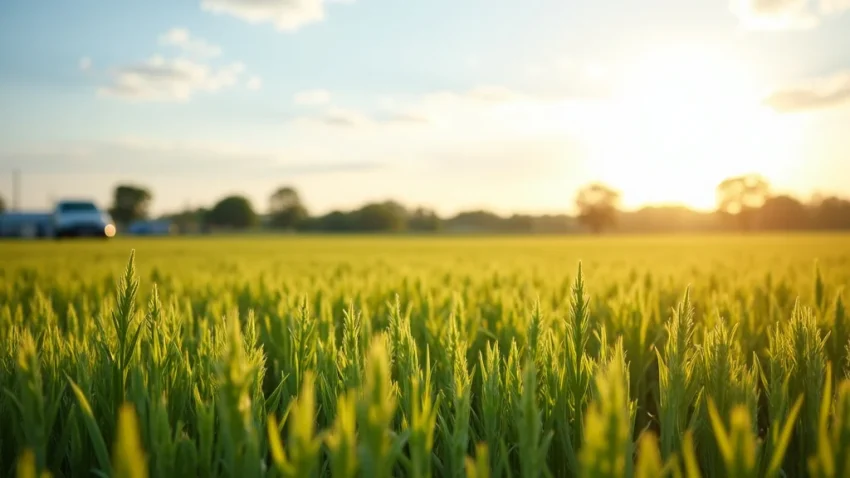
Looking for agriculture land for sale near me can feel like a big task, especially if you’re new to it. Many folks find it tricky to know where to start or what to look for. Don’t worry!
We’ll break it down step-by-step. We’ll make finding the right piece of land simple and clear. Get ready to discover what’s next in your search for that perfect spot.
Key Takeaways
- You will learn how to start your search for agriculture land.
- Key factors for choosing land will be explained.
- Tips for evaluating different types of agriculture land will be covered.
- Steps for making an offer and closing on land will be shared.
- Common questions about buying farmland will be answered.
Finding Agriculture Land For Sale Near Me
Finding agriculture land for sale near me is the first big step for anyone dreaming of starting or expanding a farm. This is where your agricultural vision begins to take root. It’s exciting to think about rows of crops or pastures for livestock, but the search itself needs a clear plan.
This section will guide you through the initial steps of locating available land in your desired area.
Start Your Search Online
The internet is a vast resource for finding agriculture land. Many websites are specifically designed to list farms and ranches for sale. These platforms often have filters that allow you to narrow down your search by location, size, price, and even specific features like water rights or soil types.
It’s a great way to get an overview of what’s available without leaving your home.
- Utilize online real estate portals.
- Look for agricultural-specific listing sites.
- Set up alerts for new listings.
When you use online portals, be sure to use specific keywords. Typing in “farmland for sale,” “ranch land,” or “acreage for farming” along with your town or county will yield more relevant results. Some national real estate sites have dedicated sections for agricultural properties.
Smaller, local real estate agencies might also list their properties on their own websites. Checking these regularly can give you an edge.
Connect with Local Real Estate Agents
Real estate agents who specialize in rural properties or farmland can be invaluable. They often have access to listings that aren’t yet publicly advertised. They also understand the local market, zoning laws, and agricultural practices specific to the area.
Building a relationship with a knowledgeable agent can streamline your search significantly. They can help you find land that truly fits your needs.
- Find agents with agricultural expertise.
- Ask about their network and off-market listings.
- Discuss your specific farming goals.
An experienced agent can also help you understand the nuances of a particular parcel of land. They know which areas are prone to certain weather patterns or soil issues. They can also guide you on local property taxes and potential development restrictions.
Having this local insight is crucial for making an informed decision about buying agriculture land.
Explore Local Resources
Don’t forget about local resources. County extension offices, agricultural organizations, and even local farming communities can be excellent sources of information. Sometimes, land is sold through word-of-mouth before it ever hits the market.
Attending local farm shows or meetings can help you network and discover opportunities you wouldn’t find online.
- Visit your local county extension office.
- Join farming or agricultural associations.
- Talk to farmers in the area.
These local connections can offer insights into land history, previous uses, and current agricultural trends. They might also know of landowners who are considering selling but haven’t listed yet. This personal touch can be a powerful way to discover hidden gems when searching for agriculture land for sale near me.
Key Factors When Evaluating Agriculture Land
Once you’ve identified potential parcels of agriculture land for sale near me, it’s vital to evaluate them carefully. Not all land is created equal, and the suitability for your specific farming needs depends on several critical factors. This section will help you understand what to look for and what questions to ask before making a commitment.
Soil Quality and Type
The soil is the foundation of any agricultural operation. Different crops and livestock require different soil conditions. Understanding the soil type, its fertility, drainage, and pH level is paramount.
A soil test can reveal a lot about the land’s potential and any amendments that might be needed to support your chosen crops.
- Conduct comprehensive soil testing.
- Research the ideal soil for your intended use.
- Assess drainage and erosion potential.
For example, sandy loam soils are often preferred for vegetables because they drain well and warm up quickly in the spring. Clay soils, while holding more water and nutrients, can be heavy and drain slowly. Loam, a mix of sand, silt, and clay, is considered ideal for many types of farming.
Knowing these characteristics helps you avoid costly mistakes.
Water Availability and Rights
Access to water is non-negotiable for most forms of agriculture. This could be through wells, municipal water sources, surface water rights, or irrigation systems. Understanding the reliability and legal rights associated with water sources on the property is crucial.
Inquire about existing infrastructure and any restrictions on water usage.
- Verify water sources and their reliability.
- Investigate water rights and permits.
- Check for existing irrigation infrastructure.
Water rights can be complex, especially in arid regions. Some areas have riparian rights, meaning you have rights to water that borders your land. Others use prior appropriation, where the first person to use water has the primary right.
Understanding these legalities is as important as the physical presence of water. If the land relies on a well, find out its depth, flow rate, and maintenance history.
Topography and Terrain
The lay of the land, or topography, impacts everything from planting and harvesting to drainage and erosion. Flat or gently sloping land is generally easier to work with for large-scale farming. Steep slopes might be suitable for certain types of crops or livestock grazing but can present challenges for machinery and can be prone to erosion.
- Assess the slope of the land.
- Consider how topography affects farming operations.
- Evaluate potential for water runoff.
For instance, operating heavy machinery on very steep terrain can be dangerous and inefficient. Conversely, very flat land might require engineered drainage solutions if it tends to hold water. Understanding how water flows across the land is also key to preventing soil loss and managing moisture levels for crops.
A topographic map can be a helpful tool here.
Zoning and Land Use Regulations
Before you buy, confirm that the land is zoned for agricultural use and that your intended activities are permitted. Zoning laws dictate what you can and cannot do on the property. Sometimes land is zoned for mixed use or has specific agricultural designations that might limit certain types of farming or require special permits.
- Check local zoning ordinances.
- Confirm your planned agricultural activities are allowed.
- Inquire about any easements or restrictions.
For example, some agricultural zones might restrict the operation of certain types of businesses, like large processing plants or commercial event venues, even if the land is otherwise suitable for farming. It’s also important to check for any recorded easements, which are rights granted to others to use a portion of your land, such as for utility lines or access roads. Understanding these regulations prevents future conflicts and ensures your plans are feasible.
Infrastructure and Accessibility
Consider the existing infrastructure on the land, such as barns, fences, and utility hookups. Access to roads is also important for transporting goods and equipment. Are there public roads, or will you need to maintain a private drive?
Proximity to markets, suppliers, and essential services also plays a role in the practicality of operating a farm on the land.
- Assess existing farm buildings and fences.
- Evaluate road access and maintenance needs.
- Consider proximity to markets and services.
Imagine needing to transport a large harvest to a processing plant. If the nearest highway is miles away down a rough dirt road, this adds significant time and cost. Similarly, having access to reliable electricity, internet, and phone service is increasingly important for modern farming operations, whether for irrigation pumps, climate control in storage facilities, or communication.
Understanding Different Types of Agriculture Land
When searching for agriculture land for sale near me, you’ll encounter various types of properties. Each has its own advantages and disadvantages depending on your farming goals. Knowing the differences will help you make a more informed choice and avoid buying land that isn’t the best fit for your needs.
Cropland
Cropland is land primarily used for growing crops. It often has good soil fertility, adequate water access, and relatively flat or gently sloping terrain suitable for mechanization. This is ideal for row crops like corn, soybeans, wheat, or vegetables.
The productivity of cropland can be enhanced by irrigation systems and good soil management practices.
- Best suited for annual and perennial crop production.
- Requires good soil fertility and water management.
- Often benefits from access to farm machinery.
For example, land designated as prime cropland will typically have a deep topsoil layer rich in organic matter. It will also have a good structure that allows for root penetration and water infiltration. Farmers often rotate crops on these lands to maintain soil health and prevent nutrient depletion.
Buying established cropland can mean inheriting healthy soil that’s ready for immediate use.
Pasture Land
Pasture land is used for grazing livestock such as cattle, sheep, or horses. It typically consists of grasses, legumes, and other forage plants. While it may not be as fertile as prime cropland, good pasture land provides a sustainable food source for animals.
Proper pasture management, including rotational grazing, is essential to prevent overgrazing and maintain healthy forage growth.
- Ideal for raising livestock for grazing.
- Requires healthy forage growth and water sources.
- Rotation grazing is a key management practice.
Consider a scenario where a rancher wants to expand their herd. Pasture land is their primary need. They will look for areas with abundant grasses that can sustain their animals throughout the grazing season.
Access to reliable water sources, like ponds or troughs, is also a critical factor. The cost per acre for pasture land is often lower than for prime cropland.
Timberland
Timberland is land primarily covered with trees, managed for the production of timber and other forest products. While not typically used for traditional crop farming or livestock grazing, timberland can be a valuable agricultural asset, especially if it’s managed for long-term timber harvests. It can also be used for agroforestry practices, combining timber with other agricultural activities.
- Land managed for timber production.
- Can offer long-term income from wood products.
- May be suitable for integrated farming systems.
A landowner might purchase timberland with the intention of harvesting lumber over several decades. This requires understanding forestry management, sustainable harvesting techniques, and market prices for different types of wood. Some timberland might also have potential for recreational uses like hunting or be suitable for developing orchards or vineyards if cleared appropriately.
Its value comes from trees and forest resources.
Mixed-Use Agricultural Land
Many properties offer a combination of uses. You might find land with a portion of productive cropland, some pasture, and perhaps a wooded area. This type of mixed-use agricultural land provides flexibility.
It allows farmers to diversify their operations, for example, by growing crops on one part of the land and raising a small herd of animals on another.
- Offers flexibility for diverse farming operations.
- Can combine crop, livestock, and timber activities.
- Provides multiple income streams.
A farmer looking to start a diversified farm might seek out mixed-use land. They could plant cash crops on the open fields, graze a few sheep on the pasture, and even harvest firewood from the wooded section. This diversification can help spread risk and provide income throughout the year.
It’s a practical choice for those who want to explore multiple agricultural ventures.
The Process of Buying Agriculture Land
Purchasing agriculture land for sale near me involves several steps, from making an offer to finalizing the sale. Understanding this process helps ensure a smooth transaction and avoids common pitfalls. This section outlines the typical stages involved in buying farmland.
Making an Offer
Once you’ve found the perfect piece of land and completed your due diligence, it’s time to make an offer. This typically involves a written document outlining the purchase price, terms, conditions, and closing date. Your real estate agent will usually help you prepare this offer.
It’s important to include contingencies, such as a satisfactory land inspection and financing approval, to protect your interests.
- Submit a formal written offer.
- Include a proposed purchase price and terms.
- Add contingencies for inspections and financing.
When making an offer, consider the market value of comparable properties. Your agent can provide this data. Be prepared to negotiate.
The seller may accept your offer, reject it, or make a counteroffer. If a counteroffer is made, you then have the option to accept, reject, or make another counteroffer. This back-and-forth continues until both parties agree or negotiations break down.
Securing Financing
Most buyers will need some form of financing to purchase land. This could include traditional bank loans, agricultural loans from specialized lenders, or seller financing. It’s wise to get pre-approved for a loan before making an offer to understand your budget and demonstrate your seriousness as a buyer.
Loan terms and interest rates can vary significantly between lenders.
- Explore loan options and lenders.
- Get pre-approved for a mortgage.
- Understand loan terms and interest rates.
Agricultural loans often have specific requirements related to the land’s use and the borrower’s experience. Lenders will want to see a solid business plan for how you intend to use the land. They will also assess your credit history and financial stability.
Securing financing is a critical step, as a loan falling through can jeopardize the entire purchase.
Due Diligence and Inspections
This is a crucial period where you verify everything about the property. It includes physical inspections of the land and any structures, environmental assessments, and a review of legal documents like title reports and surveys. You might hire professionals to conduct soil tests, water tests, and structural assessments of any existing buildings.
This is your chance to uncover any hidden issues.
- Conduct thorough land and structural inspections.
- Perform environmental and soil testing.
- Review title reports and surveys.
For example, an environmental assessment might reveal past contamination from agricultural chemicals or underground storage tanks, which could require expensive remediation. A land survey will clearly define the property boundaries, which is vital to ensure you are buying the exact acreage advertised and to identify any potential boundary disputes with neighbors. This phase helps you avoid costly surprises down the road.
Closing the Deal
The closing is the final step where ownership of the property is legally transferred to you. This usually happens at a title company or attorney’s office. You’ll sign all the necessary paperwork, and the funds will be transferred to the seller.
The deed will then be recorded with the local government, officially making you the new owner of the agriculture land.
- Sign all legal documents.
- Transfer funds to the seller.
- Record the deed with the county.
At closing, you will typically pay closing costs, which can include fees for title insurance, attorney fees, recording fees, and any remaining loan origination fees. It’s important to review the closing statement carefully to ensure all charges are accurate and expected. Once everything is signed and paid, you’ll receive the keys and the deed to your new farmland.
Congratulations, you’ve successfully purchased agriculture land!
Common Myths Debunked
Myth 1 Farmland is always cheap
Many people assume farmland is always inexpensive. However, prices vary greatly depending on location, soil quality, water access, and market demand. Prime agricultural land in desirable areas can be quite costly.
Factors like proximity to urban centers or specialized agricultural regions significantly influence prices. While it might be less expensive than urban real estate, it’s far from universally cheap.
Myth 2 You need to be a farmer to buy farmland
This is not true. While farming experience is beneficial, you don’t need to be a farmer to own farmland. Many investors purchase farmland for its long-term appreciation potential or lease it to experienced farmers.
You can also use the land for other purposes permitted by zoning, such as recreation, conservation, or even developing a hobby farm. Ownership doesn’t require daily farming operations.
Myth 3 All farmland has good soil
Farmland quality differs significantly. Some land is ideal for specific crops, while others may have poor drainage, low fertility, or be prone to erosion. Soil testing is essential to understand the actual quality and suitability of any land you consider buying for agriculture.
It’s a common misconception that all land labeled as farmland is inherently fertile and ready for any crop.
Myth 4 You can build any structure on agriculture land
Agriculture land often has specific zoning regulations that may restrict the types of structures you can build. While farm-related buildings like barns and silos are usually permitted, residential or commercial structures might be limited or require special permits. Always check local zoning ordinances before making assumptions about what you can construct on the property.
Frequently Asked Questions
Question: How can I find out if a property is zoned for agriculture?
Answer: You can typically find this information by contacting your local county or city planning and zoning department. They maintain records of land use classifications and can tell you the current zoning of any property.
Question: What is included in a typical land survey?
Answer: A land survey marks the legal boundaries of the property, identifies any encroachments, and notes easements or rights-of-way. It’s a critical document for understanding exactly what land you are buying.
Question: How much down payment is usually required for farmland?
Answer: Down payment requirements can vary by lender and loan type. For agricultural loans, it often ranges from 10% to 30% of the purchase price, but some specialized programs might offer lower requirements.
Question: Can I get a loan if I have no farming experience?
Answer: Yes, it’s possible. Lenders will assess your financial stability and may require a business plan detailing how you intend to use the land, potentially through leasing it to experienced farmers. They might also look at your credit history and overall financial health.
Question: What are closing costs for land purchases?
Answer: Closing costs can include appraisal fees, title insurance, attorney fees, recording fees, loan origination fees, and escrow fees. They generally range from 2% to 5% of the loan amount or purchase price.
Summary
Finding agriculture land for sale near me involves several key steps. Start with online searches and local agents. Always check soil quality, water access, and zoning.
Understand the differences between cropland, pasture, and timberland. The buying process includes making offers, securing financing, thorough inspections, and finally, closing the deal. Armed with this information, you are ready to start your search with confidence and find the perfect piece of land for your agricultural dreams.